Your First Drop-In Game: A Calm Arrival Plan
Your first drop-in game feels easier with a calm arrival plan: learn the local rhythm, find the organiser and ask for a clear way to join.
Your first drop-in game can feel awkward before you have even touched a ball. A calm arrival plan gives you something useful to do: watch how the group organises itself, find the person coordinating play, then ask where you can fit in. You do not need to know anyone in advance or arrive with a polished introduction.
Arrive with time to read the space
Give yourself a little room to get oriented before play starts or the next game begins. Drop-in sessions can be informal, but a few details usually tell you where to stand and whom to ask.
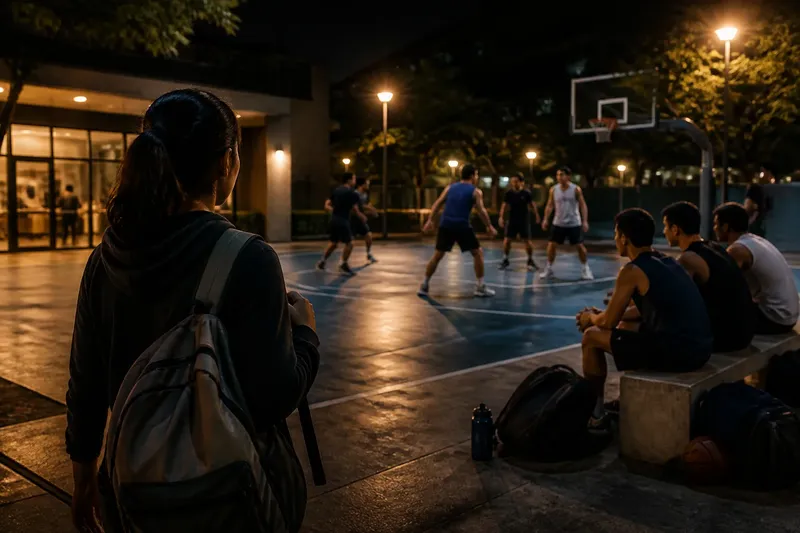
- Check the right court or field. Look for the activity area named in the session listing, such as the outdoor basketball court beside the community centre. If several groups are using the same space, check signs or ask staff before walking into an active game.
- Choose a spot that does not interrupt play. Wait near the sideline, entrance or benches rather than standing in a passing lane or directly behind a goal. Put your bag out of the way and keep the playing area clear.
- Take a moment to observe. Notice whether players rotate after each point, use a queue, split into teams or wait for the organiser to call the next game. You are looking for the local routine, not judging your own ability against the people already playing.
This short pause helps you approach with a useful question. It also prevents the common confusion of joining a side that is already full or mistaking a warm-up for the start of a match.
Find the person who is coordinating play
In a casual game, the organiser may not wear a badge or hold a clipboard. Look for someone greeting arrivals, arranging teams, keeping track of turns or explaining the rules. If no one stands out, ask a player who is resting or someone at the venue desk.
Keep the opening direct: “Hi, I’m new to this drop-in. Who should I check in with?” That gives the person an easy way to point you towards a host, without asking them to pause a rally or explain everything at once.
If the group seems to organise itself, try: “I’m looking to join the next game. How are you rotating players?” The answer may be as simple as waiting for a team to finish, adding your name to a list or joining the smaller side.
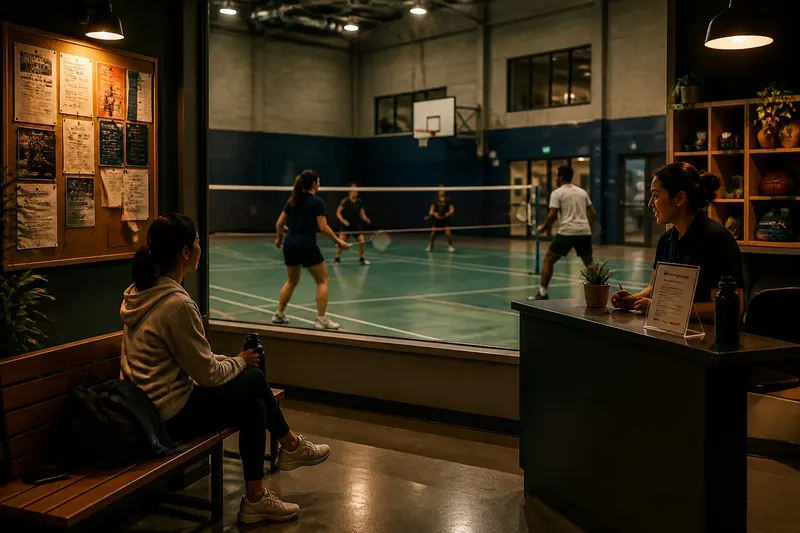
Say you arrive at a community badminton session while two doubles games are under way. You notice a few people waiting beside the court and ask one of them how turns work. If they point you to a queue, you can add your name and wait without guessing whether you should walk onto a court.
Ask for a clear way into the next game
Once you have found the organiser or learned the group’s routine, make your request easy to answer. You could say, “I’m happy to join wherever there’s room. Should I wait here or join a side?” This communicates that you are ready while leaving the group to direct you.
For team games, mention a relevant preference without turning it into a long explanation. For example: “I’m new to this format, so I’d be glad to start in a simple position.” If you have an access need or a concern about contact, raise it before you join; the organiser can tell you whether the session can accommodate it.
Listen for the practical details: how teams are chosen, where substitutes wait, whether the game has a time limit and what happens when a point or round ends. Ask only what you need to take part safely and understand the rotation. You can learn finer points as the session unfolds.
What should you ask before joining?
How do I know when it is my turn?
Ask where waiting players stand and who calls the next person in. Some groups use a visible queue; others rotate the losing team or invite people after each round.
Do I need to know the rules already?
Ask whether the group has a quick explanation for newcomers. You can also request one reminder during play if a rule is unclear, rather than trying to memorise every detail before joining.
What if the teams look full?
Ask whether the next game is open or whether there is a waiting list. If the session is full, the organiser can explain when another place may open or whether there is another suitable session.
What if I do not know anyone there?
You can still approach the organiser or a player who is sitting out and say that you are new. A direct question about the joining routine is enough; you do not need to explain why you came alone.
Join at the pace the session allows
Once you are invited in, move to the position or waiting area the organiser indicates. Confirm the basic boundary if it is not obvious: which court is in use, where play restarts or how to signal that you are ready. Then focus on the next simple action rather than trying to master the whole group’s style at once.
If you miss a cue, ask briefly between plays: “Was I meant to rotate?” or “Where do you restart from?” A calm question is more useful than guessing and disrupting the next point. If the game is fast, watch one exchange from the edge and ask when a natural pause arrives.
Give yourself permission to decline a particular game if its pace or format does not feel right. You can say, “I’ll sit this round out and join the next one.” That keeps the door open while giving you a moment to understand how the group plays.
Leave the next arrival easier
At the end of a game, thank the person who helped you join and ask when the next session runs or whether the group uses a booking page or noticeboard. If you enjoyed the session, find out whether newcomers should arrive at a particular point in the schedule. These small details make your next visit feel less like starting from scratch.
Your first drop-in game does not have to turn into a full evening or an instant friendship. The useful result is knowing where to go, whom to ask and how the group handles turns. For your next visit, remember the simple sequence: observe from the edge, find the organiser, ask how to join, and follow the rotation.