Why City Recreation Rooms Became Places to Meet
City recreation rooms can make it easier to meet through sport, with clear ways to watch, ask about open play and join without already knowing a team.
City recreation rooms can be places to meet as well as places to play. If you are looking for a city recreation room, check whether you can watch, ask about open play and join without arriving with a team.
Clubs, classes and court bookings remain useful for people who want a set time and activity. Some venues also make room for less formal visits, so a newcomer can find out what is happening before deciding whether to take part. The difference depends on the venue’s schedule, layout and welcome arrangements, not on a single standard model.
Organised sessions give sport a reliable structure
A booked court or timetabled class helps a group coordinate. Markings, equipment storage and changing facilities support activities such as badminton, basketball, indoor football and dance. Coaches and organisers explain the session, while booking information helps people know when and where to arrive.
That structure suits regular players and newcomers who want instruction. It can be less straightforward for someone who has only a short window free, does not know the booking system or would rather observe before joining. A venue can address that gap by stating which sessions welcome drop-ins and where visitors should go with questions.
Clear options make a first visit easier
Visitors do not all want the same level of involvement. One person may join a game; another may watch with a friend, speak to a host or wait for a class to finish. A venue feels easier to approach when those options are visible and nobody is expected to take part immediately.
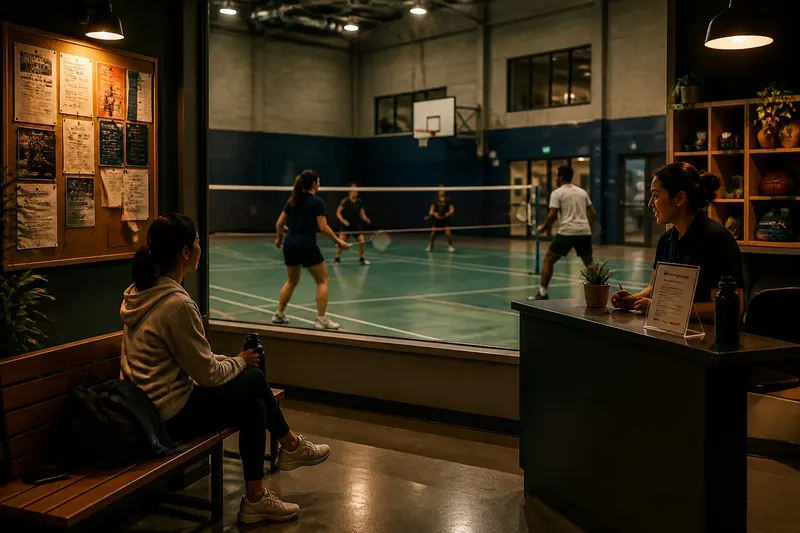
Say you have recently moved near a community sports hall and want to meet people, but you do not know anyone who plays. You check the hall’s website and see that its open-play session welcomes individual visitors; you arrive, ask the front desk whether the court is available, and wait in the marked seating area. A host explains how players take turns, so you can decide to join a game or simply watch. The observable result is a clear choice and a less uncertain first visit, not a promise of instant friendship.
Layout and signs help visitors read the room
A bench with a view of the court can make waiting feel connected to the activity. A noticeboard, water point or shared table can give people somewhere to pause and talk. Clear sightlines and a visible reception desk help visitors work out where to go.
Shared areas still need boundaries. A class may need distance from a noisy game, and changing areas need privacy. Keep walkways clear and make it obvious which spaces are reserved for booked activities. Signs can explain whether visitors may watch, whether equipment is available, how to ask to join and whether booking is required.
What should you check before visiting a city recreation room?
Can I watch before I join?
Check the venue’s website, session board or front desk for its visitor policy. If watching is allowed, ask where to sit so you do not interrupt a booked activity.
Does open play require a booking?
“Open play” can still have venue-specific rules. Confirm whether you need to reserve a place, pay a fee or arrive during a particular session before setting out.
Can I borrow equipment?
Look for details about loan equipment on the venue’s information board or ask staff. If equipment is not available, ask what you need to bring before joining.
Who can explain how the session works?
Find out whether a front-desk worker, coach or session host is available when you arrive. A named contact can explain where to wait and how people join without requiring a long introduction.
Check the practical details before you go
Use this list to decide what to do next. Venue rules vary, so rely on the facility’s own information when details are unclear.
- Check the session timetable; if it lists an open session at a suitable time, plan to attend then, but if it shows only booked activity, contact the venue about another option.
- Check whether a booking is required; if drop-ins are accepted, follow the stated arrival process, but if advance booking is required, reserve a place or choose a different session.
- Check the visitor policy for watching; if spectators are permitted, use the designated seating, but if the policy is unclear, ask staff before entering the activity area.
- Check the equipment information; if loan equipment is available, ask how to borrow it, but if it is not, bring the listed kit or ask whether another session provides it.
- Check the footwear and clothing rules; if your usual indoor shoes meet the venue’s requirements, wear them, but if they do not, bring suitable shoes or contact the venue before travelling.
- Check the age and supervision rules; if they allow you to attend as planned, follow the stated arrangements, but if an accompanying adult is required, arrange one or choose an appropriate session.
- Check the contact details and location; if the entry point and opening information are clear, head to the stated entrance, but if anything conflicts, call or message the venue before setting out.
For a first visit, look for the session board and a visible welcome point. Ask one direct question: “Can I watch, and what should I do if I want to join?” The answer will help you decide whether the session fits your time and comfort level. A city recreation room is easier to use when its rules are clear and a visitor can choose how much to take part.