The Park Loop That Turns Waiting Time into Play
A park loop with simple landmarks turns an uncertain wait into an easy, flexible chance to move, pause and include whoever is with you.
How can a park loop make waiting time easier to use? A simple park loop gives you a route you can remember, with familiar landmarks that make casual movement feel less like a planned workout and more like an invitation to play.
The point is not to cover ground quickly or keep everyone moving. It is to make the next choice obvious: walk to the fountain, pause by the trees, then decide whether to continue, turn back or try a small game. That structure can help when a visit has no fixed end time and people arrive with different energy.
Choose landmarks that make the route easy to read
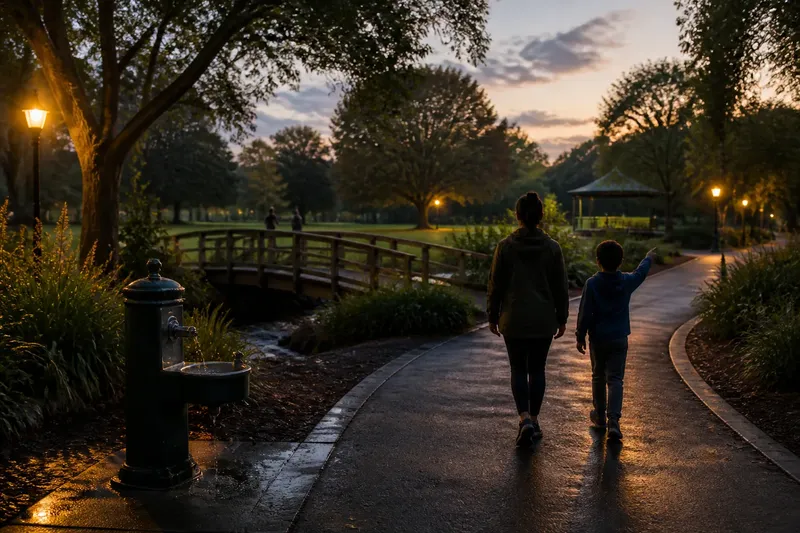
Start by noticing the park’s existing features. A path junction, drinking fountain, bandstand, broad tree or visible playground entrance can serve as a marker. Choose landmarks that are easy to recognise from the path, rather than small signs or details that require everyone to stop and search.
For a first loop, use a route that returns to a familiar point without crossing a busy entrance or cutting through a game already in progress. It might follow the main path from a gate to a fountain, curve past a line of trees and return along a wider path. The landmarks matter more than the shape: each should help people understand where they are and what comes next.
Keep the route flexible. A loop can be a full circuit, a short out-and-back walk, or a section of a larger path. If one stretch is crowded, muddy or difficult for someone in the group, use another visible landmark as the turning point. The route should serve the visit, not dictate it.
Imagine a delayed pick-up at the park
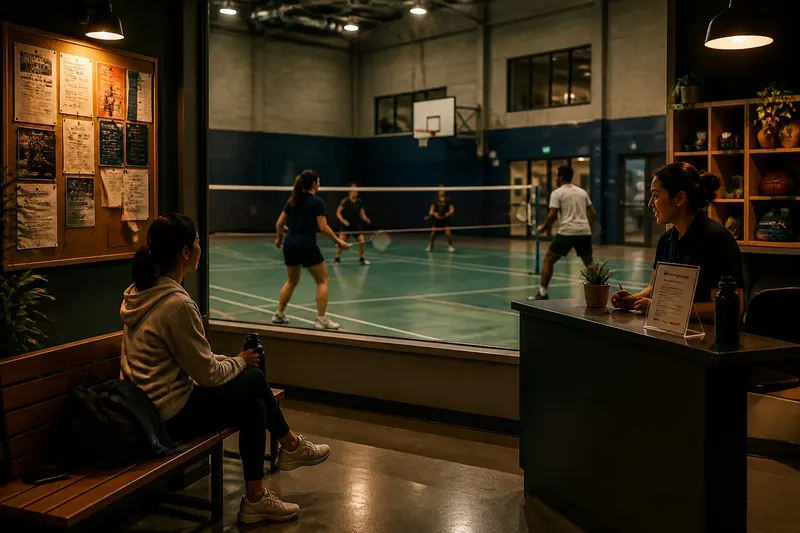
Say you are waiting for a friend to finish a class at a neighbourhood recreation centre. You have a child with you, and the wait has no firm end time. The child is restless, but you do not want to promise a full game or carry equipment. Near the centre, the park path passes a drinking fountain, a low wooden footbridge and a broad lawn before returning to the entrance.
You name the fountain as the first stop and the bridge as the next. On the way to the fountain, you walk at a comfortable pace and invite the child to point out something green along the path. At the fountain, you pause and check whether your friend has arrived. If not, you continue to the bridge. There, the child can choose to walk back by the same path or take the longer curve past the lawn.
The result is not a formal session. The waiting has a shape, and the child has a say in what happens next. If the friend arrives early, you can leave from the nearest path back to the entrance. If the child loses interest, the fountain remains a clear return point. The landmarks make stopping feel like part of the plan rather than a failed attempt to keep going.
Use each landmark to offer a small choice
A marker works best when it creates a natural pause. At each one, offer a simple choice that suits the space and the people with you. You could walk quietly to the next tree, take a slow lap around a clear patch of grass, or pause to watch the water at the fountain. Keep the invitation light; anyone can pass without needing to explain.
Use the park itself as the prompt. A row of trees might invite a gentle walk between two visible points. A broad, open lawn could be a place to stretch or toss a soft ball if the area is free and local rules allow it. A path junction can offer a choice between the shorter route back and another section of the loop.
In the imagined pick-up wait, the bridge becomes a decision point rather than a destination with a task attached. One person might want to head back, while another chooses the longer curve. The group can split only if everyone knows where to meet and it is appropriate for the people involved; otherwise, take the shorter shared route. This keeps the outing welcoming without turning every stop into an activity everyone must join.
Let the loop adapt to different bodies and moods
A repeatable route can include people who prefer different paces. Agree that the next landmark is a place to regroup, not a finish line. Someone can walk ahead at a relaxed pace while another takes a slower route, provided the path is suitable and the group can remain together safely.
Make a shorter version easy to choose. From the fountain, return to the entrance rather than continuing to the lawn. If a wheelchair, pushchair or mobility aid is part of the group, check that the chosen path is accessible and that its surface and crossings suit the person using it. The person should set the pace and say what route works for them.
Weather and crowding can change the plan. A wet path may call for staying on a paved section; a busy lawn may be better left to the people already using it. Where the right choice depends on park rules or posted guidance, follow those instructions. The loop can still offer a useful rhythm when the activity changes from walking to sitting together at a landmark.
What makes a park loop easy to use?
How long should the loop be?
Choose a route that feels manageable before anyone becomes tired or bored, then treat the return point as adjustable. A short loop is often easier to repeat than a route that requires everyone to commit to a distant destination.
Does the loop need a game?
No. Landmarks can simply organise a walk and give people a reason to pause. If the group wants a game, choose one that fits the space and does not interfere with other park users.
What if the park is crowded?
Stay on the path, skip busy features and choose another visible marker. If there is no clear route that feels comfortable, sit together or leave the loop for another visit.
How can a newcomer join midway?
Tell them the next landmark and the direction you are heading, using a feature they can see or recognise. Agree on a simple meeting point if plans might change, rather than expecting them to guess where the group will be.
Keep the route familiar but not rigid
On later visits, retain one or two landmarks and let the rest vary. A familiar fountain can anchor a different return path, or the loop can end at a bench when people would rather talk than keep walking. That balance makes the park loop useful for everyday waiting: its structure is easy to remember, while the activity remains optional.
For the next park visit, pick two visible landmarks and decide which one offers an easy route back. That small bit of orientation can turn an uncertain pause into a shared chance to move, rest or simply choose what happens next.