The Overpacked Sports Bag: What Usually Stays Unused
An overpacked sports bag can slow your exit and crowd out useful kit. Pack by outing purpose, then leave behind items without a clear job.
What should you leave out of an overpacked sports bag? Start with the outing, not the gear: a bag for a quick stop at the courts needs a different load from one meant for a change of clothes after a longer session. Packing for a specific plan makes it easier to spot what is likely to stay unused.
The aim is not to carry as little as possible. It is to make each item earn its place. When every object has a job, you can find what you need without digging past spare kit for a session you are not having.
Write down what the outing actually involves
Before opening the bag, name the activity and the practical needs around it. Are you going straight from work? Will you change afterwards? Is the court or field likely to be wet? Will you have somewhere to refill a bottle? These details shape the load more reliably than a general fear of being caught without something.
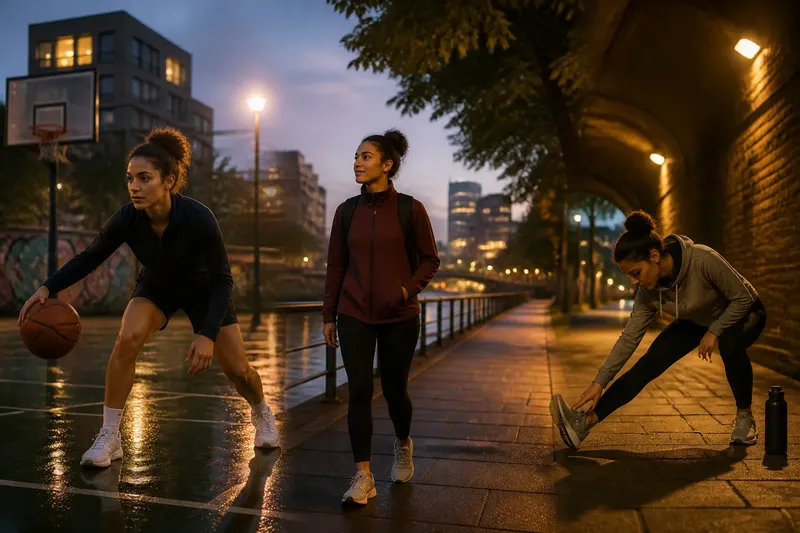
Keep the plan to the outing you expect, not every outing the bag could conceivably serve. For a casual game at a neighbourhood court, the activity may call for comfortable clothes, shoes you can move in, water and a way to carry your keys. A separate shower kit or a second top belongs only if the plan includes changing.
Make a quick note on your phone if you regularly combine sport with commuting. A recurring note such as “court after work” can list the needs that genuinely apply to that routine. Edit it when the plan changes instead of adding items just because they have been useful on another day.
Give every item one clear purpose
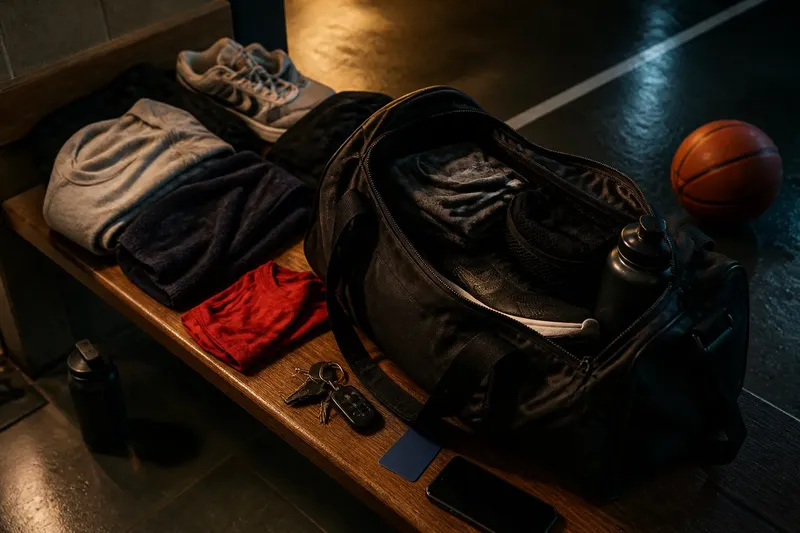
Lay the possible contents on a bench or a clear patch of floor. For each item, finish the sentence: “I need this for…” If the answer is vague—“just in case”, “for later” or “it might come in handy”—set the item aside while you check the plan.
Sort the contents into three simple groups:
- Needed for the activity: the clothing, footwear or ordinary personal item you will use to take part.
- Needed for the route: items required because you are travelling, changing, or going somewhere afterwards.
- Possible extras: things with no clear role in this particular outing.
This is where overpacking often becomes visible. A second water bottle may duplicate the first. A spare sweatshirt may be unnecessary if you are heading home directly. An extra set of clothes can be useful for a planned change, but less so when it has no destination or purpose.
Say you are taking the bus from work to an outdoor basketball court, then travelling home in the clothes you wore to play. You place a towel and a full change of clothes beside your bag, but neither has a job in that plan. You leave them at home and keep the bottle, keys and clothes needed for the game; the expected result is a bag with room for those essentials and fewer items to search through.
Check the route before adding backup items
Some objects seem necessary because the outing involves an unknown. Replace that guess with a quick route check. Look at the venue’s own information for facilities that affect your plan, such as a changing area or drinking-water access. Check the journey too: a long walk in changeable weather may call for a light outer layer, while a short trip between home and a nearby court may not.
Do not pack duplicates to cover details you can settle beforehand. If you are unsure whether a group has the ball or other shared kit, ask the organiser rather than carrying another one. If you will meet friends at a recreation centre, find out whether the item you need is already available there. A brief message or venue check can remove a bulky guess from the bag.
Keep personal needs in view. Medication, accessibility items, or other things you rely on are not clutter simply because you do not use them every time. Their purpose is the need they meet when it arises. Follow the relevant product instructions and local rules where they apply, and ask a qualified professional about health or safety questions that need individual advice.
Pack in the order you will reach for things
Once the contents are settled, arrange them by use rather than by size. Put the items you need on arrival near the top or in an easy-to-reach pocket. Keep keys and travel cards together in a zipped compartment. Place damp or dirty clothes in a separate bag only if you expect to change during the outing.
Use the compartments already in the bag before adding pouches and organisers. Extra containers can help keep small items together, but they also occupy space and may create another layer to rummage through. A simple plastic or washable bag can be useful for clothing that needs separation; avoid packing one automatically when you are not expecting wet or dirty kit.
Leave a little room for the return trip. A bag packed tightly at home has nowhere to put a layer you take off or a shirt you change out of. The aim is not an empty bag, but one that stays manageable after the activity as well as before it.
What should stay out of a sports bag?
Should I bring a spare outfit?
Bring one if you have planned a change, expect to get wet or dirty, or need different clothes for what follows. If you will travel home in what you wear to play, a full spare outfit may not have a clear use.
Do I need a second bottle?
Usually, one suitable bottle is enough for a straightforward outing. Consider a second only when the route, access to refills or your personal needs make it useful for this specific plan.
What if I do not know what the venue provides?
Check the venue’s current information or ask the organiser before packing bulky shared items. If you cannot confirm an optional extra, decide whether carrying it would solve a real problem or merely cover an unspecified possibility.
How often should I review the bag?
Review it after the outing, while you can still remember what you used. Remove anything left in the bag without a purpose for the next plan, and keep only personal essentials that should remain there.
Use the return journey to improve the next pack
When you get home, take everything out rather than leaving the bag ready in the hallway. Separate used clothes, return personal items to their usual place and notice which objects travelled without being touched. That does not mean they must always stay home; it gives you a reason to include them only when the next plan calls for them.
For a repeat activity, adjust the saved “court after work” note rather than rebuilding the list from memory. If you used a layer because the route was exposed, keep it on that version. If a spare item came home untouched, remove it unless another outing detail makes it relevant. This small review keeps an overpacked sports bag from becoming the default.
Before you leave, ask one final question: can you name the job of every item in the bag today? If an item has no answer, set it aside. You can still pack thoughtfully for changing plans, but the bag should reflect the outing you are making, not every possibility you can imagine.